
Why Gaps in Your Chiropractic Treatment Can Hurt Your Insurance Claim
Consistent treatment is not about attending appointments for the sake of checking a box. It is about documenting your symptoms, following an appropriate care plan, monitoring your recovery, and creating a clear record that connects your injuries to the collision.
⚠ Florida law: you have 14 days after your accident to see a doctor — or lose up to $10,000 in PIP benefits.
Same-Day Appt → (850) 508-5951
Written by
Dr. Eric Pragle, D.C.
Car Accident Chiropractor · Pragle Chiropractic, Accident And Injury Clinic Tallahassee FL
Dr. Eric Pragle is a licensed Doctor of Chiropractic specializing in automobile accident injury evaluation and treatment. With deep expertise in Florida PIP insurance law, he helps Tallahassee accident victims navigate their coverage and receive the care they need — from initial evaluation through full recovery.
Key Takeaway
Consistent treatment is not about attending appointments for the sake of checking a box. It is about documenting your symptoms, following an appropriate care plan, monitoring your recovery, and creating a clear record that connects your injuries to the collision.
Why Gaps in Your Chiropractic Treatment Can Hurt Your Insurance Claim
After a car accident, it is common to feel uncertain about what to do next. You may be sore, busy with work and family obligations, waiting for an insurance adjuster to call, or hoping the pain will simply fade on its own. Many accident injuries—especially whiplash, back strain, headaches, and soft-tissue injuries—do not always feel severe immediately after the crash.
But if you begin chiropractic care and then repeatedly miss appointments, wait weeks between visits, or stop treatment before you have recovered, those gaps can create problems beyond your physical health. They can also make it harder to show an insurance company how the accident affected you.
Consistent treatment is not about attending appointments for the sake of checking a box. It is about documenting your symptoms, following an appropriate care plan, monitoring your recovery, and creating a clear record that connects your injuries to the collision.
What Is a Treatment Gap?
A treatment gap is a significant break or inconsistency in medical care after an accident. It can happen in several ways:
- Waiting too long after the accident to seek an evaluation
- Starting care but missing appointments frequently
- Going several weeks without treatment despite ongoing symptoms
- Stopping care before your provider determines that you have reached maximum improvement
- Resuming treatment later without a clear explanation for the interruption
- Failing to follow up after a referral, imaging order, or specialist recommendation
Not every missed appointment will damage a claim. Life happens. People get sick, travel, have transportation problems, work unpredictable schedules, or need to care for children or family members.
However, insurance companies often look for patterns. If the records show that you reported substantial pain but did not seek care for weeks at a time, an adjuster may argue that the injury was not serious, that you recovered sooner than claimed, or that something other than the crash caused your symptoms.
Insurance Companies Review the Timeline
An insurance claim is built on evidence. Your medical records are among the most important pieces of evidence because they help establish three key points:
- You were injured.
- Your injuries were related to the accident.
- The care you received was reasonable and necessary.
A consistent treatment timeline can help support all three.
For example, imagine that you are rear-ended and develop neck stiffness, headaches, low-back pain, and pain between your shoulder blades. You receive an examination shortly after the crash, begin a conservative chiropractic treatment plan, and attend scheduled visits as your provider monitors your symptoms, mobility, daily limitations, and response to care.
That sequence creates a clear clinical story: accident, symptoms, evaluation, diagnosis, treatment, reassessment, and recovery.
Now consider a different timeline. You are injured in a collision, wait three weeks to be evaluated, attend two appointments, disappear from care for a month, then return reporting severe pain after doing heavy lifting at work or having another incident. Even if the original crash truly caused the injury, the insurance company may question whether the later symptoms came from the accident, an intervening activity, a pre-existing condition, or a new injury.
The issue is not that your pain is automatically invalid. The issue is that unexplained gaps can make causation more difficult to prove.
Gaps Can Be Used to Question the Severity of Your Injury
Insurance adjusters and defense attorneys routinely review treatment frequency. When there are long breaks in care, they may argue:
- “If the patient were really in pain, they would have continued treatment.”
- “The patient must have improved during the time they were not treating.”
- “The injuries could not have been severe if there was no need for regular care.”
- “The later complaints are unrelated to the collision.”
- “The patient failed to mitigate their damages by not following the recommended treatment plan.”
These arguments do not always reflect the reality of accident recovery. People often delay care because they are trying to be tough, do not understand the claims process, cannot miss work, or believe their symptoms will improve on their own. Others may face transportation limitations, financial stress, or challenges scheduling around family obligations.
Still, the insurance company may focus on what appears in the record—not the full context of your life. That is why communication matters. If you need to miss visits or pause care, let your chiropractic office know why. A properly documented explanation can be far more helpful than a silent absence.
Consistency Helps Document Your Recovery
Chiropractic treatment after a motor vehicle accident should involve more than simply showing up for adjustments. A quality clinical record tracks how you are progressing over time.
During your visits, your provider may document:
- Neck, back, shoulder, hip, or extremity pain
- Headaches, dizziness, or other post-accident complaints
- Reduced range of motion
- Muscle spasm, tenderness, and joint dysfunction
- Difficulty sleeping
- Problems sitting, standing, driving, bending, lifting, or working
- Changes in pain levels and functional limitations
- Your response to chiropractic care and home recommendations
- The need for imaging, medical evaluation, or referral when appropriate
That ongoing documentation can show whether you are improving, plateauing, or continuing to struggle with daily activities. It also allows the provider to modify the treatment plan based on your condition.
Without regular visits, there may be little or no documentation of what happened during the gap. If symptoms worsened, returned, or interfered with your work and daily life, the insurer may claim there is no objective or contemporaneous record supporting those complaints.
Stopping Too Soon Can Affect Both Health and Documentation
Many accident patients stop care as soon as they feel somewhat better. This is understandable—nobody wants to spend extra time at appointments once the worst pain begins to ease.
However, reduced pain does not always mean that full function has returned. You may still have restricted movement, weakness, muscle imbalance, difficulty sleeping, pain with certain activities, or recurring symptoms after work, exercise, or driving.
Stopping care prematurely can create two problems.
First, it may interrupt your physical recovery. Some soft-tissue and biomechanical injuries improve gradually and require appropriate follow-up, therapeutic exercise, activity guidance, and reassessment.
Second, it can make the final stage of your claim harder to document. Your records may not clearly show whether you reached maximum medical improvement, whether you were discharged because you recovered, whether you simply stopped attending, or whether additional care was recommended.
A formal re-evaluation and discharge plan, when clinically appropriate, can provide a much clearer picture than simply ending treatment without notice.
Be Honest—But Do Not Minimize Your Symptoms
The goal of treatment is not to exaggerate an injury. It is to accurately document what you are experiencing and receive appropriate care.
Be specific with your chiropractor about how the accident has affected your life. Instead of simply saying, “My neck hurts,” explain whether you have trouble checking blind spots while driving, turning your head at work, sleeping comfortably, lifting your child, concentrating because of headaches, or sitting through a full shift.
Likewise, report improvements honestly. If one symptom has resolved but another remains, say so. Accurate, consistent reporting supports better clinical decisions and produces more credible records than vague or exaggerated complaints.
If you have a pre-existing condition or prior injury, disclose it. Pre-existing problems do not necessarily prevent recovery for accident-related aggravation. In fact, clear documentation of your prior condition and post-accident changes may be important. Trying to hide relevant history can create unnecessary confusion later.
What To Do If You Already Have a Gap in Care
A treatment gap does not automatically end your case or mean that you cannot receive care. The best step is to address it promptly.
- Schedule an evaluation or follow-up as soon as possible if symptoms are continuing.
- Be honest about why you missed care or delayed returning.
- Explain whether your pain improved, worsened, or changed during the gap.
- Tell your provider about any new accidents, falls, work incidents, exercise injuries, or other events that may have affected your condition.
- Follow through on referrals, imaging recommendations, and home-care instructions when appropriate.
- Keep your attorney informed, if you have one, especially if scheduling, transportation, or financial issues are interfering with care.
Your chiropractor can document your current condition, update the treatment plan, and determine whether conservative care remains appropriate or whether further evaluation is needed.
Protect Your Health and Your Claim
After an auto accident, your first priority should be your health. Seeking prompt evaluation and following a medically appropriate treatment plan can help identify injuries, reduce the risk of prolonged dysfunction, and support your recovery.
It can also protect the integrity of your insurance claim. Consistent care creates a clearer timeline, gives your providers the opportunity to track your progress, and helps demonstrate that you took your injuries seriously.
If you have been in a car accident and are dealing with neck pain, back pain, headaches, stiffness, or other symptoms, do not wait for the insurance company to decide what your care should look like. Schedule an evaluation with an experienced auto injury chiropractor. A thorough examination, individualized treatment plan, and consistent follow-up can help you move toward recovery while creating the documentation your claim may need.

Chiropractic care at Pragle Chiropractic, Tallahassee FL
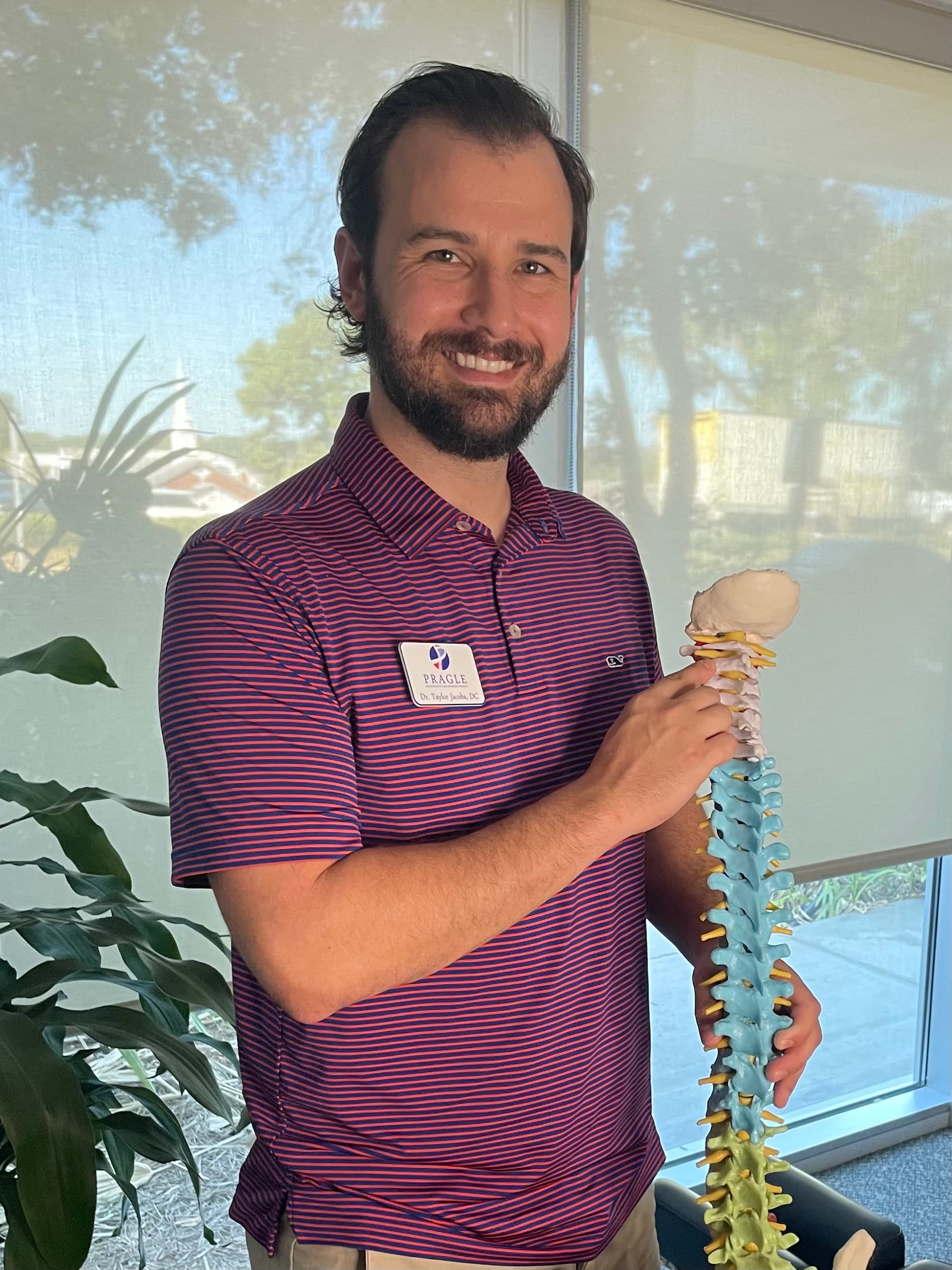
Dr. Pragle explaining spinal anatomy to a patient
“The 14-day deadline isn't just a legal technicality — it's the difference between $10,000 and $2,500 in medical coverage for your recovery.”
⚠ Don't Wait
See a Doctor Today — Protect Your $10,000 PIP Benefit
Same-day appointments. We bill PIP insurance directly — no cost to start.
Call (850) 508-5951Book online →Frequently Asked Questions
Answered by Dr. Eric Pragle, D.C.
What happens if I fail to see a doctor within 14 days after a Florida car accident?
Does seeing a chiropractor count for the 14-day rule?
What qualifies as an Emergency Medical Condition (EMC)?
Can I go to urgent care instead of a chiropractor to start my PIP clock?
I felt fine after my accident but now I am in pain three days later. Is it too late?
Does the 14-day rule apply even if the other driver was clearly at fault?
Pragle Chiropractic, Accident And Injury Clinic · Tallahassee, FL
Were You in a Car Accident?
Same-Day Appointments Available.
We bill Florida PIP insurance directly — no out-of-pocket cost to start your recovery. Serving all of Tallahassee including FSU and FAMU students.