
Whiplash After a Car Accident in Tallahassee: The Complete Symptoms, Timeline and Treatment Guide
Whiplash is the most common injury after a Tallahassee car accident and the one most often underestimated. This guide walks through every symptom, the recovery timeline, and the evidence-based treatment path Dr. Pragle uses at Pragle Chiropractic.
⚠ Florida law: you have 14 days after your accident to see a doctor — or lose up to $10,000 in PIP benefits.
Same-Day Appt → (850) 508-5951
Written by
Dr. Pragle, D.C.
Car Accident Chiropractor · Pragle Chiropractic, Accident And Injury Clinic Tallahassee FL
Dr. Pragle is a licensed Doctor of Chiropractic specializing in automobile accident injury evaluation and treatment. With deep expertise in Florida PIP insurance law, he helps Tallahassee accident victims navigate their coverage and receive the care they need — from initial evaluation through full recovery.
In this article
Key Takeaway
Whiplash is the most common injury after a Tallahassee car accident and the one most often underestimated. This guide walks through every symptom, the recovery timeline, and the evidence-based treatment path Dr. Pragle uses at Pragle Chiropractic.
If you were rear-ended on Apalachee Parkway or sideswiped on Monroe Street, there is a good chance you are reading this the next morning with a stiff neck and a knot in your shoulders, wondering whether it is serious. Whiplash is the single most common injury we evaluate at Pragle Chiropractic, and it is also the injury that patients most often write off as nothing - until the pain ramps up 48 hours later. This guide is the resource we wish every Tallahassee crash victim had in their hands the day of the collision, because the decisions you make in the first two weeks determine how smoothly you recover.
Whiplash is not a minor complaint that goes away on its own, and it is not something you should wait out. It is a real mechanical injury to the cervical spine, the muscles that support it, and the ligaments that hold the vertebrae in alignment. Some patients heal in four to six weeks with the right care. Others, especially those who delay evaluation, develop chronic neck pain that lingers for months or years. The difference between those two outcomes usually comes down to how quickly you got evaluated, how thoroughly the injury was diagnosed, and whether you received active, structured treatment instead of a soft collar and a bottle of ibuprofen.
What Whiplash Actually Is
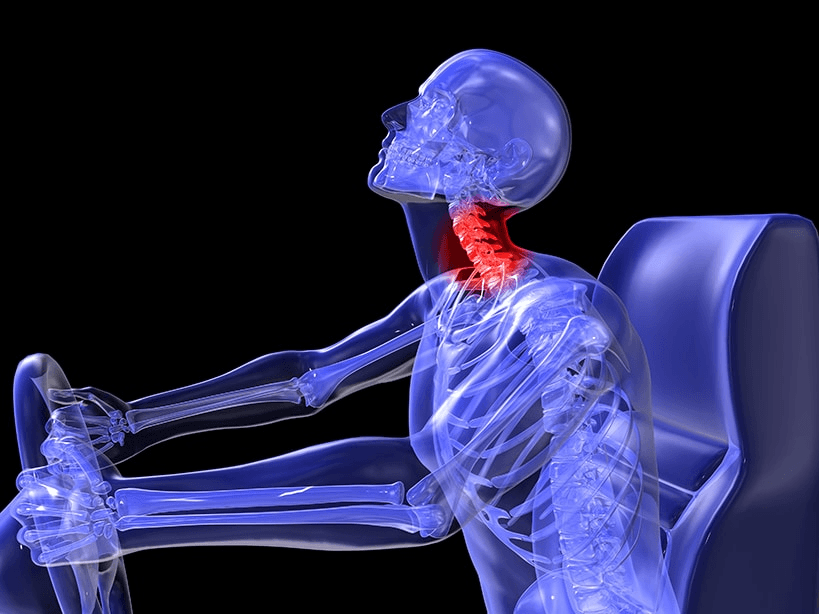
Whiplash is a neck injury caused by a rapid, forceful back-and-forth motion of the head - the same mechanic that cracks a whip, which is where the name comes from. In a rear-end collision, your torso is shoved forward by the seat back while your head, which is heavy and only loosely attached, lags behind and then snaps forward. That whip motion stretches and tears structures in the cervical spine faster than your muscles can react to protect them. The injury is formally called whiplash associated disorder, or WAD, and it covers damage to muscles, ligaments, facet joints, intervertebral discs, and nerve roots.
The Anatomy of the Neck
Your cervical spine is made up of seven vertebrae, labeled C1 through C7, stacked on top of each other and separated by intervertebral discs that act as shock absorbers. The vertebrae connect at small joints on the back of the spine called facet joints, which guide and limit how far each segment can bend and rotate. A network of ligaments holds the whole column together, and layers of muscles - the trapezius, levator scapulae, sternocleidomastoid, and the deeper suboccipital muscles - move and stabilize the head. When whiplash occurs, the facets get jammed or sprained, the ligaments overstretch, the discs can bulge, and the muscles go into protective spasm. The injury is rarely to one structure; it is usually to several at once.
The Quebec Task Force Grading System
Doctors grade whiplash severity using a system developed by the Quebec Task Force. Grade I means neck pain, stiffness, and tenderness with no physical signs the doctor can find on exam and no neurologic symptoms. Grade II adds objective findings - reduced range of motion, points of tenderness, or muscle spasm that the doctor can see and feel. Grade III is where neurologic symptoms appear - radiating pain, numbness, tingling, or weakness traveling down an arm, which means a nerve root is involved. Grade IV is a serious injury with a fracture or spinal instability that requires surgical consultation. The vast majority of whiplash cases we see at the clinic are Grade I or Grade II, but we evaluate every patient for the red flags that would bump them into Grade III or IV.
How a Crash Causes Whiplash
The mechanics of a rear-end collision happen shockingly fast. The entire whiplash sequence - from the moment your car is struck to the moment your head stops moving - takes less than 500 milliseconds. That is half a second for the whole injury. Here is what happens in that window: the struck vehicle lurches forward, the seat back pushes your torso forward with it, but your head is not supported yet, so it extends backward over the top of the seat. This creates an S-shaped curve in the cervical spine where the lower neck flexes while the upper neck extends - a shape the spine was never designed to make.
Your muscles cannot protect you in that window because voluntary muscle reaction takes about 300 milliseconds, and the damaging motion is already done by then. By the time your neck muscles even start to contract, the ligaments and facets have already been overstretched. This is why even strong, athletic patients get whiplash - strength does not help when the injury is faster than the nervous system can respond. Headrest position matters enormously here: a headrest set too low sits below your head and acts as a fulcrum that increases extension, while a headrest level with the top of your head and positioned two inches or less behind it can cut whiplash injury risk significantly.
Whiplash Symptoms - The Full List
Whiplash is not just neck pain. The symptom picture is broad, and many of the symptoms surprise patients because they do not obviously connect to a neck injury. The classic cluster includes neck pain and stiffness, reduced range of motion so you cannot fully turn your head to check a blind spot, and headaches that radiate up from the base of the skull - these are called cervicogenic headaches and they are triggered by irritated joints and muscles at the top of the neck. Shoulder and upper back pain are extremely common because the trapezius and levator scapulae muscles both anchor in the neck and refer pain downward.
Beyond the obvious musculoskeletal pain, whiplash patients frequently report dizziness or a sense of imbalance, vision disturbances like blurred vision or trouble focusing, tinnitus or ringing in the ears, brain fog with difficulty concentrating, and disrupted sleep because they cannot find a comfortable position. These symptoms come from the upper cervical spine, where the joints and muscles have dense connections to the vestibular and visual systems. None of these symptoms mean you are imagining the injury - they are well-documented consequences of upper cervical dysfunction.
Grade I and II vs. Grade III - Neurologic Symptoms
The most important distinction in whiplash symptoms is whether nerve tissue is involved. Grade I and II whiplash stays in the musculoskeletal realm - pain, stiffness, spasm, headache. Grade III whiplash involves neurologic symptoms: numbness or tingling traveling into the shoulder, arm, hand, or fingers; weakness when you grip or lift; or sharp, shooting pain down an arm. These signs indicate that a disc has bulged and contacted a nerve root, or that inflammation around a nerve root is constricting it. If you have any of these neurologic symptoms, you need imaging and likely a referral in addition to chiropractic care. We screen every patient for these red flags on the first visit.
The Symptom Timeline
First 24 Hours - Adrenaline Masks the Injury
At the scene of the accident, most patients feel shaken but not necessarily in severe neck pain. Adrenaline and stress hormones suppress pain perception, and the inflammatory cascade has not fully developed yet. You may feel tight or slightly sore, but many people tell us they thought they were fine. This is the trap - the absence of severe pain in the first few hours does not mean the injury is not there. The structures are already damaged; the symptoms just have not caught up.
24 to 72 Hours - The Inflammation Peak
This is when most whiplash patients first realize they are hurt. The inflammatory response peaks between 24 and 72 hours after the injury, bringing swelling, increased pain, muscle spasm, and stiffness that was not present at the scene. Patients routinely tell us the pain is twice as bad on day two or three as it was on day one. This is normal biology, not a sign that something suddenly got worse - but it is the moment people realize they need to be seen.
Days 4 to 14 - The Subacute Phase
In the subacute phase, the acute inflammation starts to settle but the underlying mechanical problems - jammed facets, restricted joint motion, tight scarred-up muscles - persist. Pain may fluctuate day to day, often worse after activity or after a night of poor sleep. This is the window where treatment matters most. Patients who start structured care in this phase tend to recover fully. Patients who do not tend to develop compensatory movement patterns that lock in the dysfunction and drive chronicity.
Weeks 2 to 8 - Recovery vs. Chronicity
By the two-month mark, most well-treated whiplash patients are substantially improved or fully recovered. A meaningful minority, however, still have pain. The risk factors for chronicity are well studied: high initial pain intensity, neurologic involvement, delayed treatment, passive coping strategies like prolonged rest or collar use, prior whiplash episodes, and psychological stress surrounding the crash. Early active treatment is the single factor most within your control. We cannot change how hard you were hit, but we can change whether the facets are mobilized, the muscles retrained, and the scar tissue guided down before it becomes permanent.
Why Whiplash Is Often Missed or Dismissed
Whiplash is invisible on standard X-rays. The injury is to soft tissues - ligaments, muscles, discs, joint capsules - none of which show up well on plain film. A patient can have a genuinely injured neck and a radiology report that says everything is normal, and that mismatch fuels skepticism from insurers, employers, and sometimes even the patient's own family. Insurance adjusters routinely use the clean X-ray and the delayed symptom onset to argue the injury is minor or exaggerated, and they push for quick settlement before the full picture is clear.
This is why Florida's 14-day PIP rule matters so much. Under Florida personal injury protection law, you must be evaluated by a medical professional within 14 days of the accident to access the full $10,000 in PIP benefits. If you wait beyond 14 days, your coverage drops to $5,000 or is denied entirely. We see patients every month who tried to tough it out for three weeks, only to discover their pain is worse and their insurance window has closed. Get evaluated within 72 hours if you can, and never later than 14 days. The evaluation is the documentation you need to protect both your health and your claim.
How Whiplash Is Diagnosed
Whiplash diagnosis is clinical first, imaging second. We start with a detailed history of the crash - the direction of impact, the position you were in, whether your head was turned, whether you were aware the collision was coming. Then we perform a full orthopedic and neurologic exam of the cervical spine: range of motion in all directions, palpation of every spinal segment and muscle group, orthopedic stress tests that load the facets and ligaments, and neurologic tests that check reflexes, sensation, and strength in the upper extremities. The exam tells us which structures are injured and whether nerve tissue is involved.
Imaging is not always needed, but it is indicated in specific situations. We take X-rays when there is significant trauma, when the exam suggests instability, or to rule out fracture in a Grade IV presentation. MRI is indicated when a patient has neurologic symptoms - radiating numbness, tingling, or weakness - because MRI is the only study that clearly shows disc bulges, nerve root compression, and soft tissue injury. MRI is also indicated when a patient's pain is not responding to four to six weeks of appropriate care, because we need to know if there is a structural problem we have been missing. A clean X-ray does not mean a clean neck, and a negative MRI does not mean no injury - many whiplash injuries show up only on clinical exam.
Whiplash Treatment - Evidence-Based Care
The old model of whiplash treatment - soft collar, bed rest, wait it out - is wrong, and the research has been clear about this for over twenty years. Prolonged rest and collar use cause muscle atrophy, joint stiffness, and worse long-term outcomes. Modern evidence-based whiplash care is active: we get the joints moving, retrain the stabilizing muscles, and get you back to function as fast as the tissue healing allows. At Pragle Chiropractic, this is the framework Dr. Pragle uses.
Chiropractic Adjustments and Joint Mobilization
The facet joints of the cervical spine are the most commonly injured structures in whiplash, and they respond to adjustments. Gentle, targeted chiropractic adjustments restore normal joint motion in segments that have become restricted or jammed. We use both manual adjustments and instrument-assisted techniques depending on the patient's comfort and the severity of the injury. Intersegmental traction - a therapy that gently mobilizes the spinal segments through a controlled range of motion - is also part of restoring mobility to injured joints without forcing them.
Soft Tissue Work - Myofascial Release and IASTM
Whiplash tears muscle fibers and triggers dense scar tissue formation, and that scar tissue has to be addressed or it becomes chronic restriction. We use myofascial release and instrument-assisted soft tissue mobilization, or IASTM, to break down adhesions in the trapezius, levator scapulae, suboccipitals, and other cervical muscles. This work is uncomfortable but it is one of the most effective tools we have for restoring pliable, pain-free tissue.
Cervical Rehabilitation - Deep Cervical Flexor Retraining
Whiplash inhibits the deep cervical flexor muscles - the small muscles that stabilize the front of the neck - and they do not automatically wake back up when the pain fades. If they stay inhibited, the larger superficial muscles overwork, the posture degrades, and the pain returns. We retrain these muscles with specific low-load endurance exercises that rebuild the stabilizing layer. This is the piece that separates a full recovery from a recurrent one, and it is a cornerstone of the rehabilitation phase.
Adjunctive Modalities and Medication
Heat and cold therapy, ultrasound, and electrical muscle stimulation are useful adjuncts in the acute phase to control pain and inflammation, but they are not the core treatment - they support the active care. Medically, NSAIDs and muscle relaxants have a role in the first one to two weeks to control pain enough that the patient can participate in active rehabilitation. Medication alone without active care produces poor long-term outcomes.
When Referral Is Appropriate
Some whiplash cases need care beyond what we provide in the chiropractic office. If a patient has persistent radicular symptoms that do not respond to four to six weeks of care, or if MRI shows a significant disc herniation compressing a nerve root, we refer to neurology or pain management for procedures like medial branch blocks and radiofrequency ablation of the facet nerves. These procedures can be highly effective for facet-mediated chronic neck pain, and they are part of the continuum of care - not a replacement for the foundational work we do. We co-manage these patients and stay involved throughout.
Recovery Timeline and What to Expect
Recovery timelines vary, and we give patients honest ranges based on severity. Mild Grade I whiplash typically resolves in four to six weeks with appropriate care. Typical Grade II whiplash takes eight to twelve weeks because there is more tissue damage and rehabilitation takes longer. Complex cases, especially those with pre-existing degeneration, neurologic involvement, or delayed treatment, can take six months or more to fully resolve. The goal is not just pain relief but full functional recovery - normal range of motion, normal sleep, and the ability to work and exercise without compensation.
The factors that improve outcomes are early evaluation, active treatment, adherence to the home exercise program, and gradual return to normal activity. The factors that worsen outcomes are delayed treatment, prolonged rest, passive coping, and litigation stress. You cannot control every factor, but you can control when you get evaluated and whether you do the work of rehabilitation. Patients who start care within the first week and follow through with their visits and exercises have the best outcomes, full stop.
Car Accidents in Tallahassee
Tallahassee has specific crash corridors we see over and over in the clinic. Apalachee Parkway, with its high-speed merging traffic and frequent rear-end collisions at the intersections near Walmart and the shopping centers, is one of the most common. Capital Circle NE and Capital Circle SW see heavy commuter volume and a lot of sideswipe and rear-end collisions, especially at the interchange with I-10. Monroe Street, with its stop-and-go traffic through the downtown and midtown corridors, produces a steady stream of low-speed rear-end impacts that still cause real whiplash. I-10 itself, with high speeds and the merges at the Thomasville Road and Monroe Street exits, generates the highest-severity crashes we treat.
Mahan Drive, heading east toward the hospitals and the newer developments, is another corridor where we see frequent collisions. The pattern we see at Pragle Chiropractic is consistent: patients come in two to four days after the crash, often after the pain has peaked, often having initially told themselves and the officer at the scene that they were fine. Many of them waited because they hoped the stiffness would pass. The sooner you come in after a collision on any of these corridors, the cleaner your recovery tends to be.
When to Get Evaluated
If you have been in any car accident in the Tallahassee area and you have neck pain, stiffness, headache, or any of the symptoms described in this guide, get evaluated within 48 to 72 hours. Even if your pain seems mild, the clinical exam can identify injuries that will worsen over the following week. Pragle Chiropractic accepts Florida PIP coverage, so there is no out-of-pocket barrier to getting evaluated after a crash - your auto insurance pays for the care. We offer same-week evaluations and we will work with your attorney if you have one.
Call the office at (850) 508-5951 or book online through our website. Dr. Pragle will perform a full exam, document your injuries, and start treatment right away if it is appropriate. Do not wait for the pain to peak. Do not wait past the 14-day PIP window. The single best thing you can do for your recovery after a Tallahassee car accident is to be seen, be examined, and be treated early.

Neck pain and stiffness are the hallmark signs of whiplash after a car accident
Chiropractic cervical adjustment at Pragle Chiropractic, Tallahassee FL
“The 14-day deadline isn't just a legal technicality — it's the difference between $10,000 and $2,500 in medical coverage for your recovery.”
⚠ Don't Wait
See a Doctor Today — Protect Your $10,000 PIP Benefit
Same-day appointments. We bill PIP insurance directly — no cost to start.
Call (850) 508-5951Book online →Frequently Asked Questions
Answered by Dr. Pragle, D.C.
Why is my whiplash pain worse on day two or three than it was right after the accident?
Can you get whiplash from a low-speed collision?
How long does whiplash recovery take?
When should I get an MRI after a car accident?
Can you have a concussion without hitting your head?
Should I see a chiropractor and a medical doctor after my car accident?
Pragle Chiropractic, Accident And Injury Clinic · Tallahassee, FL
Were You in a Car Accident?
Same-Day Appointments Available.
We bill Florida PIP insurance directly — no out-of-pocket cost to start your recovery. Serving all of Tallahassee including FSU and FAMU students.