
Soft Tissue Injuries After a Car Accident in Tallahassee: What's Happening in Your Body and How to Heal
Step-by-step explanations of neck, back, and whiplash injuries, why they happen, and how targeted treatment relieves pain. If you were in a car accident and something feels wrong — even if you felt fine at first — this guide explains exactly what is happening inside your body and what proper care looks like.
⚠ Florida law: you have 14 days after your accident to see a doctor — or lose up to $10,000 in PIP benefits.
Same-Day Appt → (850) 508-5951
Written by
Dr. Pragle, D.C.
Car Accident Chiropractor · Pragle Chiropractic, Accident And Injury Clinic Tallahassee FL
Dr. Pragle is a licensed Doctor of Chiropractic specializing in automobile accident injury evaluation and treatment. With deep expertise in Florida PIP insurance law, he helps Tallahassee accident victims navigate their coverage and receive the care they need — from initial evaluation through full recovery.
Key Takeaway
Step-by-step explanations of neck, back, and whiplash injuries, why they happen, and how targeted treatment relieves pain. If you were in a car accident and something feels wrong — even if you felt fine at first — this guide explains exactly what is happening inside your body and what proper care looks like.
Most people who walk away from a car accident in Tallahassee assume that if they can walk and talk, they are fine. That assumption sends thousands of patients into weeks or months of worsening pain that could have been stopped early. The reason is simple: the injuries that car accidents cause most often — soft tissue injuries — are invisible on the outside, frequently delayed in symptoms, and almost always underestimated in severity.
This guide exists because the people searching after a crash deserve real medical answers, not legal summaries. We will walk through each major soft tissue injury — what the damaged structures actually are, exactly how crash forces cause that specific injury, and what the most effective treatments look like, from chiropractic care to medical intervention. Attorneys protect your rights after an accident. We focus on healing your body.
At Pragle Chiropractic, Accident and Injury Clinic, we have treated thousands of car accident patients in Tallahassee. What we see consistently is that patients who understand their injuries heal faster, follow through with treatment, and recover more completely. That is why we wrote this guide.
Why You Can Feel Fine Right After a Crash — and Be in Serious Pain 48 Hours Later
Your nervous system is built to keep you functional in a crisis. The moment a collision occurs, your adrenal glands flood your bloodstream with adrenaline (epinephrine) and cortisol. These hormones suppress pain signals, tighten muscles to protect joints, and keep you alert and mobile — even when tissue has been torn, joints compressed, and nerves irritated.
Over the next 24 to 72 hours, those hormones clear. Inflammation — your body's actual healing response — begins to build at every injury site. Fluid accumulates in damaged tissue, pressure rises around nerve roots, and protective muscle spasm locks in around injured joints. This is the phase when pain peaks. Many patients describe feeling worse on day two or three than they did immediately after the crash. That is not unusual. That is biology.
The danger is that this window, when symptoms are suppressed, is exactly when early evaluation and treatment matter most. Getting assessed within the first 48 to 72 hours allows clinicians to identify injuries before significant scar tissue formation begins, reduce the inflammatory cascade with targeted intervention, and start rehabilitation while tissue is still in its most responsive state.
Cervical Strain and Sprain: Neck Muscle and Ligament Injuries
What It Is
The cervical spine — the seven vertebrae of your neck — is supported by two types of soft tissue: muscles and tendons (which move and stabilize the neck) and ligaments (which connect bone to bone and limit excessive movement). When muscles or tendons are overstretched or torn, that is a cervical strain. When ligaments are stretched beyond their elastic limit or partially torn, that is a cervical sprain. Both can — and often do — occur together in the same crash.
The key structures involved include the deep cervical flexors (the small muscles that stabilize each vertebra independently), the scalenes (muscles running from the neck to the upper ribs, critical for head position and breathing), the sternocleidomastoid (the large muscle running from behind the ear to the collarbone), and the posterior cervical ligaments that prevent excessive forward bending.
Mechanism of Injury in a Car Accident
In a rear-end or front-end collision, the torso moves with the seat while the head, due to inertia, lags behind. This creates a sudden, violent eccentric contraction — muscles and tendons are forced to lengthen while simultaneously contracting to resist the movement, the situation most likely to cause micro-tears. The faster the velocity change and the less the occupant was braced for impact, the more severe the tissue disruption. Even low-speed crashes at 8 to 15 mph generate enough force to strain cervical structures significantly.
Side-impact crashes add rotational forces to this equation, placing asymmetric stress on one side of the neck and often producing more pronounced muscle damage on the side facing the impact.
Treatment
Chiropractic care for cervical strain and sprain centers on restoring normal joint motion, reducing muscle guarding, and rebuilding the coordination of the deep cervical stabilizers. Gentle cervical mobilization frees restricted joints without aggravating injured tissue. Myofascial release and instrument-assisted soft tissue mobilization (IASTM) address scar tissue and fascial restrictions in the damaged muscles. Specific therapeutic exercises — particularly those targeting the deep cervical flexors — are essential to restore the neuromuscular control that protects the neck from re-injury.
From a medical standpoint, NSAIDs and muscle relaxants are commonly prescribed for acute cervical strain, but recent evidence suggests using the lowest effective NSAID dose and transitioning to active rehabilitation as quickly as possible, since heavy early NSAID use may slightly impair soft-tissue healing. Heat and cold therapy, therapeutic ultrasound, and electrical stimulation provide supportive pain relief when combined with active care. If neurological symptoms develop — numbness, tingling, or weakness radiating into the arm — a cervical MRI is warranted to rule out disc involvement.
Whiplash: The Most Misunderstood Car Accident Injury
What It Is
Whiplash — formally called Cervical Acceleration-Deceleration injury (CAD) — is not simply a strained neck. It is a complex, multi-structure injury affecting the facet joints, intervertebral discs, nerve roots, muscles, and ligaments of the cervical spine, all simultaneously. The Quebec Task Force grading scale categorizes whiplash into four grades: Grade I (neck pain with no physical signs), Grade II (neck pain with reduced range of motion and point tenderness), Grade III (neurological signs such as reflex changes, weakness, or sensory deficits), and Grade IV (fracture or dislocation).
The facet joints — small paired joints at the back of each vertebra — are among the most consistently injured structures in whiplash. They become compressed, inflamed, and chemically sensitized, producing the deep, aching neck and upper back pain that does not resolve easily with rest alone. Annular tears in the intervertebral discs can allow the inner nucleus to press toward spinal cord or nerve roots, creating radiating arm symptoms. The deep cervical flexors lose their fine motor coordination, leaving the neck unstable during everyday movements.
Mechanism of Injury in a Car Accident
The entire whiplash sequence occurs in less than 500 milliseconds — faster than the human nervous system can initiate a protective muscle response. In a rear-end collision, the sequence is: the seat back drives the torso forward, the lower cervical vertebrae extend (bend backward) before the upper ones, creating a characteristic S-shaped deformation of the spine. The upper neck is simultaneously flexing while the lower neck hyperextends. Then the entire neck recoils into forward flexion as momentum carries the head forward. This double-direction loading is what separates whiplash from a simple cervical strain.
The muscles are simply too slow to protect the spine during this sequence. The injury is essentially complete before conscious thought or muscular response is possible. Headrests reduce but do not eliminate this injury pattern — they must be positioned correctly (top of the headrest at or above the top of the skull) to be effective.
Treatment
Evidence-based whiplash treatment centers on early active care rather than rest and immobilization. Prolonged collar use is no longer recommended by most clinical guidelines, as it delays the neuromuscular recovery the spine needs. Chiropractic care provides low-force spinal adjustments to restore facet joint mobility, intersegmental traction to decompress disc spaces, and a structured cervical rehabilitation protocol targeting deep flexor retraining and proprioceptive recovery. Spinal manipulation as part of a multimodal program that includes exercise and education is among the most scientifically supported approaches for post-whiplash pain.
For Grade III whiplash with confirmed neurological deficits, referral to neurology or orthopedics is appropriate. Electrodiagnostic testing (EMG and nerve conduction studies) can precisely identify which nerve root is involved. When facet joint pain persists despite conservative care, medial branch blocks or radiofrequency ablation of the medial branch nerves are evidence-based interventional options that provide lasting relief for appropriately selected patients.
Thoracic Strain and Sprain: Mid-Back Injuries That Get Overlooked
What It Is
The thoracic spine — the twelve vertebrae of the mid-back, each attached to a pair of ribs — is the most structurally rigid segment of the spine under normal conditions. This rigidity makes it more resistant to injury than the cervical or lumbar spine, but also means that when thoracic structures are damaged, the resulting dysfunction has wide-ranging effects. The costovertebral joints (where the ribs meet the spine) are particularly vulnerable, as are the paraspinal muscles, thoracic facet joints, and the posterior ligament complex.
Thoracic injuries produce a recognizable pattern: deep mid-back pain, pain or tightness with deep breathing, reduced ability to rotate the trunk, and often referral of pain around the ribcage toward the front of the chest. Many patients are told their chest pain is cardiac — it frequently is not. It is costovertebral joint irritation.
Mechanism of Injury in a Car Accident
In a frontal collision, the seatbelt, which is lifesaving and always should be worn, creates a diagonal compressive force across the sternum and chest. This compression loads the costovertebral joints from the front and strains the posterior thoracic ligaments as the torso is restrained against forward momentum. The result is often a pattern of rib head subluxation (slight malalignment of the rib head at the spine) and paraspinal muscle strain on the seatbelt side.
In side-impact crashes, the thoracic spine undergoes lateral flexion and rotation simultaneously, stressing the facet joints and paraspinal muscles asymmetrically. Rear-end impacts transmit force through the lumbar spine into the thoracic region, producing thoracic compression that is often felt as stiffness in the mid-back within 24 hours of the crash.
Treatment
Chiropractic thoracic manipulation is highly effective for costovertebral joint dysfunction and thoracic facet irritation. Specific rib mobilization techniques restore normal rib mechanics and relieve the breathing pain that patients find alarming. Postural rehabilitation is critical because thoracic injuries tend to create a forward-flexed, protective posture that, left uncorrected, leads to chronic tension in the cervical spine and shoulders.
Medical evaluation should include a chest X-ray to rule out rib fracture, which can present similarly to a sprain and requires different management. Anti-inflammatory medication and topical treatments reduce acute tissue inflammation. Heat therapy over the mid-back combined with active movement is more effective than rest alone for thoracic recovery.
Lumbar Strain, Sprain, and Disc Injury: Lower Back Damage from Crashes
What It Is
The lumbar spine carries more compressive load than any other spinal segment, which is why it is frequently injured in car accidents. Lumbar injuries from crashes range from pure muscle strain (the multifidus, quadratus lumborum, and erector spinae muscles) and ligament sprain to intervertebral disc injury and sacroiliac (SI) joint dysfunction.
The L4-L5 and L5-S1 disc levels are the most commonly affected. These discs absorb enormous compressive force and can develop annular tears (cracks in the disc's outer layer), disc bulges (the entire disc expands beyond its normal border), or herniations (the inner nucleus ruptures through the annulus and contacts nearby nerve tissue). When a herniated disc contacts the sciatic nerve roots, it creates sciatica — radiating pain, numbness, or weakness that travels down the buttock, leg, and sometimes into the foot.
Mechanism of Injury in a Car Accident
Rear-end impacts load the lumbar spine with rapid axial compression as the torso is driven forward. The seated position already pre-loads the lumbar discs significantly — the compressive force on a lumbar disc while seated is roughly 40 percent higher than while standing. Adding crash forces to this baseline load can push disc structures well beyond their failure threshold, particularly in occupants who are slightly twisted or leaning at the moment of impact.
The sacroiliac joint is frequently injured when seatbelt forces are asymmetric — the belt restrains one hip more than the other, creating a rotational shear force through the pelvis that shifts the SI joint out of its normal position. SI joint dysfunction produces pain in the lower back, buttock, and upper thigh that is consistently mistaken for lumbar disc disease. Orthopedic provocation tests (FABER, Gaenslen's, thigh thrust) are necessary to differentiate it from discogenic pain.
Treatment
Chiropractic spinal decompression therapy is particularly effective for lumbar disc injuries — traction-based distraction reduces intradiscal pressure, promotes retraction of bulging disc material, and improves nutrient exchange within the disc. Lumbar manipulation and McKenzie method rehabilitation address joint restriction, centralize disc pain, and restore functional movement patterns. SI joint dysfunction responds well to specific manipulation of the sacroiliac joint and targeted gluteal and hip stabilizer exercises.
When lumbar symptoms include leg weakness, loss of bladder or bowel control, or progressive neurological deficit, emergency evaluation is required. For confirmed disc herniation with radiculopathy that has not responded to six to eight weeks of conservative care, epidural steroid injections provide targeted anti-inflammatory effect directly at the nerve root. Spinal fusion, laminectomy, or discectomy are reserved for patients with significant neurological compromise, structural instability, or failure of all conservative and interventional approaches — but when clearly indicated, they are appropriate and well-supported by surgical evidence.
Concussion and Mild Traumatic Brain Injury: The Injury You Can't See
What It Is
A concussion is a mild traumatic brain injury (mTBI) caused by rapid acceleration, deceleration, or rotation of the brain inside the skull. Critically, the head does not need to strike anything for a concussion to occur — the rotational forces of whiplash alone are sufficient to cause neuronal shearing in the brain. This surprises many car accident patients who report they did not hit their head but are experiencing classic post-concussion symptoms.
Post-concussion symptoms include headaches (often described as pressure behind the eyes or at the base of the skull), cognitive fog and difficulty concentrating, sensitivity to light and noise, sleep disruption, irritability and emotional dysregulation, and dizziness or balance problems. These symptoms can persist for days, weeks, or — in cases of post-concussion syndrome — months to years.
Mechanism of Injury in a Car Accident
When the head undergoes rapid deceleration or rotation during a crash, the brain, which floats in cerebrospinal fluid inside the skull, lags behind and then rebounds. This rotational movement stretches and shears the axons (long projections of nerve cells) throughout the brain, disrupting electrical signaling, triggering neurochemical changes, and impairing the energy metabolism of neurons. Standard CT scans and MRIs often appear normal despite genuine neurological disruption, which is why concussion is sometimes dismissed in emergency settings.
Seek emergency evaluation if you experience: loss of consciousness, severe worsening headache, repeated vomiting, one pupil larger than the other, slurred speech, significant confusion, or numbness/weakness in limbs. These are red flags for more serious intracranial injury.
Treatment
Concussion management has evolved significantly. Complete rest — the old standard — is no longer recommended beyond the first 24 to 48 hours. Gradual, symptom-guided return to activity produces better outcomes. Cervicogenic headaches (headaches originating from the neck joints) and vestibular dysfunction (dizziness and balance problems from the inner ear system) are common post-crash complications that respond well to chiropractic care. Cervical manipulation and mobilization reduce the neck component of headaches; vestibular rehabilitation exercises address the balance and dizziness component.
For persistent post-concussion syndrome, a neurological evaluation is essential. Cognitive rehabilitation, vision therapy, and graded aerobic exercise protocols (which have strong evidence for prolonged concussion recovery) should be part of the plan. The psychological impact of concussion — anxiety, depression, and PTSD — is significant. Motor vehicle collisions substantially increase the risk of acute stress reactions and post-traumatic stress disorder, and cognitive-behavioral therapy (CBT) and trauma-focused therapy are evidence-based interventions that improve long-term function in ways that physical treatment alone cannot. This is the most consistently overlooked component of car accident recovery.
What a Proper, Evidence-Based Treatment Plan Actually Looks Like
Decades of research have produced a clear picture of what works for car accident injuries. The most scientifically supported approach combines early assessment, appropriate pain control, activity-based rehabilitation, and, when necessary, medical or surgical intervention. Here is what each phase looks like in practice.
Acute Phase (Days 1–14): Assess, Protect, and Begin Moving
The first priority is a thorough musculoskeletal and neurological examination by a trained clinician. Imaging — X-ray, CT, or MRI — is ordered when red flags are present: neurological deficit, severe mechanism of injury, or pain patterns suggesting disc or fracture involvement. For soft tissue injuries without these red flags, early imaging is generally not indicated and does not change initial management.
Rest, Ice, Compression, and Elevation (RICE) and short-term protection of injured tissue are appropriate early measures. Pain control with NSAIDs or analgesics helps patients participate in early rehab — but current evidence recommends the lowest effective dose for the shortest duration, since heavy early NSAID use may slightly impair the inflammatory response that is part of healthy tissue healing. Muscle relaxants can help manage acute spasm but should be paired with active care, not used as a substitute for it.
Subacute Phase (Weeks 2–8): Restore Motion and Address Scar Tissue
Activity-based rehabilitation — physical therapy and chiropractic manual care together — is the most scientifically supported treatment combination for post-crash neck and back pain. Spinal manipulation and mobilization restore joint mechanics. Therapeutic exercise rebuilds muscle coordination and endurance. Soft tissue therapies (myofascial release, instrument-assisted techniques, therapeutic massage) address the scar tissue that forms during initial healing and, if left untreated, creates long-term stiffness and pain.
Modalities including heat and cold therapy, therapeutic ultrasound, and electrical stimulation have supportive evidence for reducing pain and promoting soft tissue healing when used as adjuncts to active exercise — not as standalone treatments.
Remodeling Phase (Weeks 8+): Rebuild and Prevent Re-Injury
The final phase focuses on strengthening the deep stabilizer muscles, restoring proprioception (the body's sense of joint position), and returning patients to full functional activity. Neuromuscular re-education and sport- or work-specific training ensure the healed tissue can handle the demands of normal life.
When Conservative Care Is Not Enough: Interventional and Surgical Options
When pain persists despite thorough conservative management, interventional procedures provide targeted relief. Facet joint injections, medial branch blocks, steroid injections, and radiofrequency ablation are evidence-based options for facet pain, radicular pain, and chronic post-traumatic spinal pain. Randomized trials show that targeted injections can improve work capacity and reduce disability in selected patients.
Surgical options — spinal fusion, discectomy, laminectomy, and soft tissue reconstruction — are appropriate for severe structural injuries: unstable fractures, major disc herniations with confirmed neurological deficit, or significant ligament tears causing mechanical instability. Surgery is followed by structured rehabilitation to optimize recovery. At our clinic, we coordinate referrals to orthopedic surgeons and neurosurgeons when the clinical picture indicates this level of care is needed.
Car Accidents in Tallahassee: What We See at Our Clinic
Tallahassee's most injury-generating crash corridors — Apalachee Parkway, Capital Circle NE and SW, Monroe Street, and I-10 — produce a consistent pattern of injuries that our team treats every week. Rear-end collisions at traffic signals on Apalachee are among the most common sources of cervical and lumbar injury we see. Side-impact crashes at the Capital Circle and Mahan Drive intersection frequently produce thoracic and SI joint injuries from diagonal seatbelt loading.
What these patients share is that they arrive days or sometimes weeks after their crash, having waited to see if the pain would resolve on its own. By the time they come in, inflammation has peaked, protective spasm has set in, and the window for the most impactful early intervention has partially closed. Getting evaluated within 48 to 72 hours of a crash, even if you feel mostly okay, is the single most impactful decision you can make for your recovery.
Pragle Chiropractic, Accident and Injury Clinic offers same-week evaluations for car accident patients in Tallahassee. We accept Florida PIP auto insurance and work with your medical team to coordinate any imaging or specialist referrals your injuries require. Call us at (850) 508-5951 or book online to get evaluated — the earlier you come in, the better your recovery outcomes.

Chiropractic care at Pragle Chiropractic, Tallahassee FL
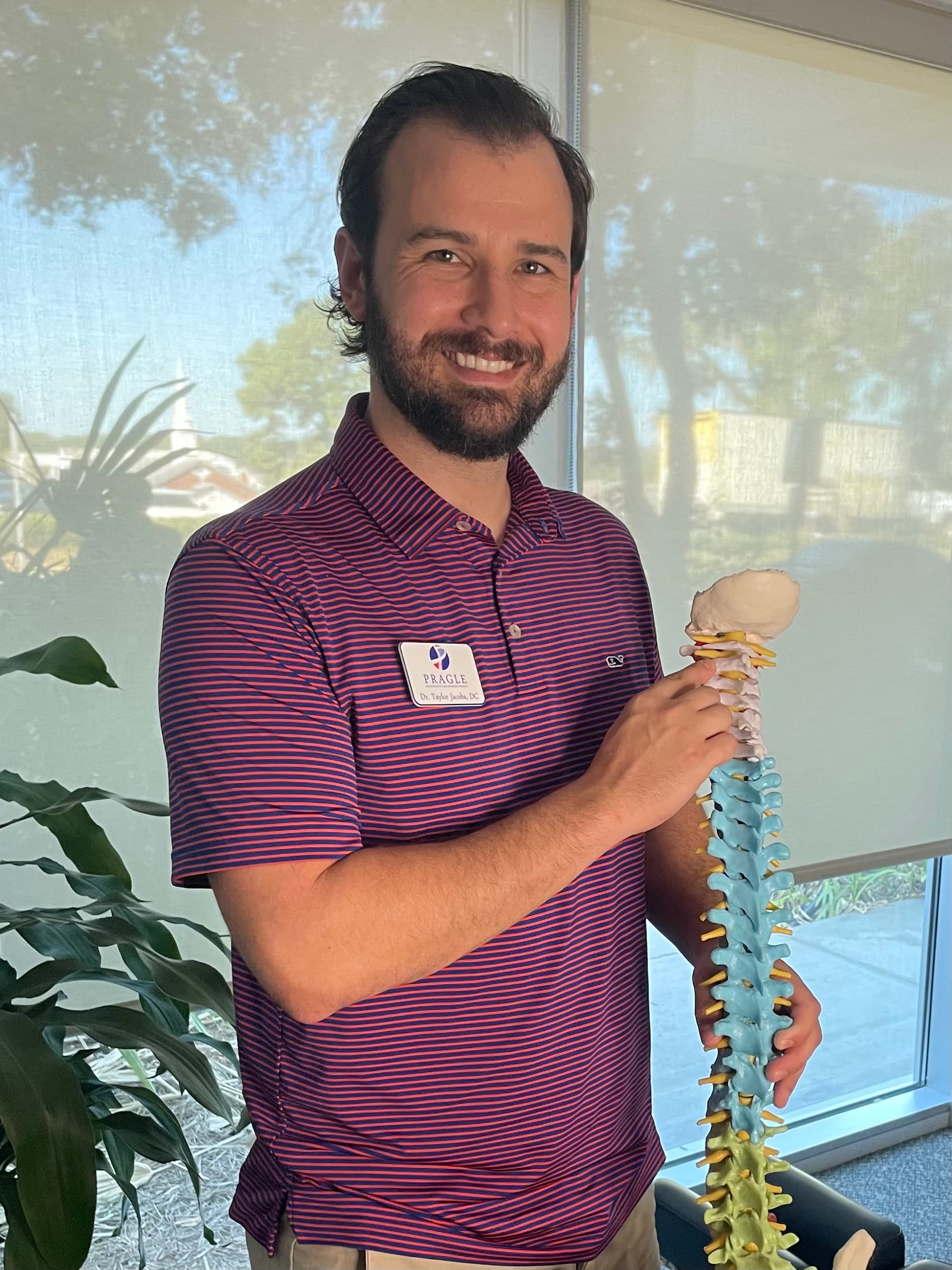
Dr. Pragle explaining spinal anatomy to a patient
“The 14-day deadline isn't just a legal technicality — it's the difference between $10,000 and $2,500 in medical coverage for your recovery.”
⚠ Don't Wait
See a Doctor Today — Protect Your $10,000 PIP Benefit
Same-day appointments. We bill PIP insurance directly — no cost to start.
Call (850) 508-5951Book online →Frequently Asked Questions
Answered by Dr. Pragle, D.C.
Why does my neck hurt more on day two or three than it did right after the crash?
What is the difference between cervical strain and whiplash?
I did not hit my head — can I still have a concussion?
How long does it take to recover from soft tissue injuries after a car accident?
When should I get an MRI after a car accident?
Can I see a chiropractor and a medical doctor at the same time for my car accident injuries?
Pragle Chiropractic, Accident And Injury Clinic · Tallahassee, FL
Were You in a Car Accident?
Same-Day Appointments Available.
We bill Florida PIP insurance directly — no out-of-pocket cost to start your recovery. Serving all of Tallahassee including FSU and FAMU students.