
Numbness and Tingling in Your Arms After a Car Crash: Could it Be a Pinched Nerve?
Your nerves act as the body’s communication system. Nerves leaving the spinal cord in the neck branch through the shoulder and down into the arm and hand. When one of these nerve pathways is irritated, compressed, or stretched after a collision, it can create symptoms far from the original injury site.
⚠ Florida law: you have 14 days after your accident to see a doctor — or lose up to $10,000 in PIP benefits.
Same-Day Appt → (850) 508-5951
Written by
Dr. Eric Pragle, D.C.
Car Accident Chiropractor · Pragle Chiropractic, Accident And Injury Clinic Tallahassee FL
Dr. Eric Pragle is a licensed Doctor of Chiropractic specializing in automobile accident injury evaluation and treatment. With deep expertise in Florida PIP insurance law, he helps Tallahassee accident victims navigate their coverage and receive the care they need — from initial evaluation through full recovery.
Key Takeaway
Your nerves act as the body’s communication system. Nerves leaving the spinal cord in the neck branch through the shoulder and down into the arm and hand. When one of these nerve pathways is irritated, compressed, or stretched after a collision, it can create symptoms far from the original injury site.
Numbness and Tingling in Your Arms After a Car Crash: Could It Be a Pinched Nerve?
Numbness, tingling, burning, or “pins and needles” in an arm or hand after a car accident should never be ignored. These symptoms may occur when a crash-related injury irritates or compresses a nerve—often in the neck, shoulder, upper back, or arm—and a thorough chiropractic evaluation can help identify the likely source and guide a conservative treatment plan.
Even a collision that seems minor can place major force on the body. The sudden acceleration and deceleration of a rear-end, side-impact, or head-on accident can strain muscles, sprain ligaments, irritate spinal joints, and affect the nerves that travel from the cervical spine into the shoulders, arms, wrists, and hands. Symptoms do not always begin immediately; some people notice them hours or days later as inflammation and muscle guarding increase.
Why a Car Crash Can Cause Arm Symptoms
Your nerves act as the body’s communication system. Nerves leaving the spinal cord in the neck branch through the shoulder and down into the arm and hand. When one of these nerve pathways is irritated, compressed, or stretched after a collision, it can create symptoms far from the original injury site.
For example, a person may feel pain near the base of the neck but experience tingling in the fingers. Another may have shoulder tightness, arm weakness, or a burning sensation that travels from the neck down toward the elbow or hand. This is often called radiating pain, meaning the discomfort follows the path of an affected nerve.
Common crash-related mechanisms include:
- Whiplash from a rear-end collision, which rapidly moves the head and neck forward and backward.
- A side-impact crash, which may force the neck and shoulder abruptly to one side.
- Bracing against the steering wheel, dashboard, seat, or door.
- Seat-belt force across the shoulder and chest.
- Direct impact to the shoulder, arm, wrist, or elbow.
- Muscle spasms and inflammation that develop after the accident and place additional tension on nearby nerve structures.
A collision does not need to involve broken bones for nerve-related symptoms to occur. Soft-tissue injuries, joint dysfunction, disc irritation, and protective muscle tightening can all contribute to pain, numbness, and tingling.
Could It Be a Pinched Nerve?
“Pinched nerve” is a common phrase, but it can describe several different problems. In medical terms, a nerve may become compressed, inflamed, irritated, or stretched. After an auto accident, this frequently involves a nerve root in the cervical spine—the neck portion of the spine.
When a nerve root in the neck is irritated, the condition may be described as cervical radiculopathy. Depending on which nerve pathway is involved, symptoms can extend into specific areas of the shoulder, arm, forearm, hand, or fingers.
Possible signs of a neck-related nerve problem include:
- Numbness or decreased sensation in one arm or hand.
- Tingling, prickling, or “electric” sensations.
- Burning pain that travels down the arm.
- Neck pain or stiffness accompanied by arm symptoms.
- Pain around the shoulder blade or upper back.
- Symptoms that worsen when turning the head, looking down, or extending the neck.
- Reduced grip strength or a feeling that the hand is weak or clumsy.
- Headaches associated with neck tension or whiplash.
- Arm symptoms that come and go depending on posture, driving, sleeping position, or activity.
Not every case of arm numbness after a crash comes from the neck. A shoulder injury, brachial plexus traction injury, elbow injury, wrist injury, or swelling around a peripheral nerve can produce similar symptoms. That is why a focused examination matters: effective care begins with identifying the probable source instead of treating every symptom as the same condition.
Common Causes After an Auto Accident
Several injuries can cause or contribute to numbness and tingling in the arms after a motor-vehicle collision.
Whiplash-Associated Neck Injury
Whiplash affects more than just muscles. Sudden neck movement can strain ligaments, irritate facet joints, create muscular guarding, and increase sensitivity around cervical nerve roots. A person may initially think they only have a sore neck, then develop shoulder pain, arm tingling, headaches, or limited motion as the body reacts to the injury.
Cervical Disc Injury or Irritation
The discs between the spinal bones help absorb shock and allow movement. A collision can aggravate a pre-existing disc issue or contribute to disc bulging, herniation, inflammation, or altered mechanics. If disc material or inflammation affects a nearby nerve root, pain and sensory changes may travel into the arm or hand.
Importantly, imaging findings and symptoms do not always match perfectly. Some people have disc changes without symptoms, while others have significant pain or tingling despite relatively subtle imaging findings. A clinical examination, accident history, and functional assessment are all important parts of the picture.
Muscle Spasm and Soft-Tissue Injury
After trauma, the body often tightens muscles to protect an injured area. While this protective response is understandable, persistent spasm in the neck, upper trapezius, scalene, chest, or shoulder muscles can contribute to pain, restricted movement, and nerve irritation. Tight tissues may reduce normal motion and create pressure or tension along nerve pathways.
Shoulder or Brachial Plexus Trauma
The brachial plexus is a network of nerves that travels from the neck through the shoulder region and into the arm. Trauma from a seat belt, direct shoulder impact, sudden traction, or forceful arm movement can irritate this nerve network. Symptoms may include shoulder pain, arm weakness, altered sensation, or tingling that is not limited to one small area of the hand.
Peripheral Nerve Entrapment
In some cases, the nerve may be irritated farther down the arm. The ulnar nerve near the elbow, median nerve at the wrist, and radial nerve in the forearm can all be affected by trauma, swelling, repetitive post-crash positioning, or direct injury. A careful provider can help determine whether the symptoms appear to originate in the neck, shoulder, elbow, wrist, or more than one location.
Why You Should Seek an Evaluation Promptly
After an accident, people commonly focus on vehicle damage, insurance calls, work obligations, and family responsibilities. Pain may also be delayed by adrenaline. But numbness, tingling, weakness, or radiating pain should be documented and evaluated promptly.
Early assessment can help establish:
- When symptoms began and how they have changed since the crash.
- Whether the symptoms are linked to neck movement, shoulder movement, posture, or specific activities.
- Whether there are signs of nerve irritation, reduced range of motion, muscle spasm, or weakness.
- Whether imaging, medical referral, or co-management is appropriate.
- A baseline record of your condition for both clinical and auto-injury documentation purposes.
At an auto injury chiropractic clinic, the evaluation should go beyond simply asking where it hurts. A provider may assess posture, cervical and shoulder range of motion, muscle tenderness and spasm, orthopedic testing, neurological findings, reflexes, grip strength, sensation, and functional limitations. Your accident details—such as crash direction, seat-belt position, head position, airbag deployment, and whether you struck part of the vehicle—can also provide useful clinical context.
How Chiropractic Care May Help
Chiropractic care can play an important role in conservative treatment for many crash-related neck, shoulder, and nerve-irritation conditions. The goal is not merely to reduce pain temporarily. A thoughtful chiropractic plan aims to improve motion, reduce mechanical stress, address soft-tissue dysfunction, support recovery, and help the patient return safely to normal daily activity.
Depending on the examination findings and your tolerance, your treatment plan may include:
- Gentle chiropractic spinal manipulation or mobilization to restore more normal joint motion.
- Soft-tissue therapy for injured or overactive muscles in the neck, upper back, shoulder, and chest.
- Therapeutic exercises to improve cervical stability, shoulder mechanics, posture, and mobility.
- Stretching and nerve-mobility exercises when clinically appropriate.
- Physiotherapy modalities intended to reduce pain, spasm, or inflammation.
- Activity and ergonomic guidance for work, driving, sleep, computer use, and lifting.
- Coordination with medical providers, imaging facilities, pain-management specialists, neurologists, orthopedists, or physical therapists when needed.
Chiropractic care should be individualized. Someone with acute pain and severe movement restriction may need a gentler approach than a person who is several weeks into recovery and ready for progressive rehabilitation. The best plan is based on examination findings, symptom behavior, functional goals, and any medical red flags.
Don’t Wait for Symptoms to “Work Themselves Out”
Numbness and tingling after a car crash are not symptoms to dismiss as simple soreness. They may reflect nerve irritation, whiplash-associated injury, disc involvement, shoulder trauma, or another condition that deserves professional evaluation.
If your arm symptoms began after a motor-vehicle accident, Pragle Chiropractic, Accident, & Injury Clinic can provide a detailed assessment, conservative treatment options, and documentation of your injuries and functional limitations. Early care may help reduce pain, improve mobility, and support a more complete recovery—while also helping ensure that your condition is properly evaluated from the start.

Chiropractic care at Pragle Chiropractic, Tallahassee FL
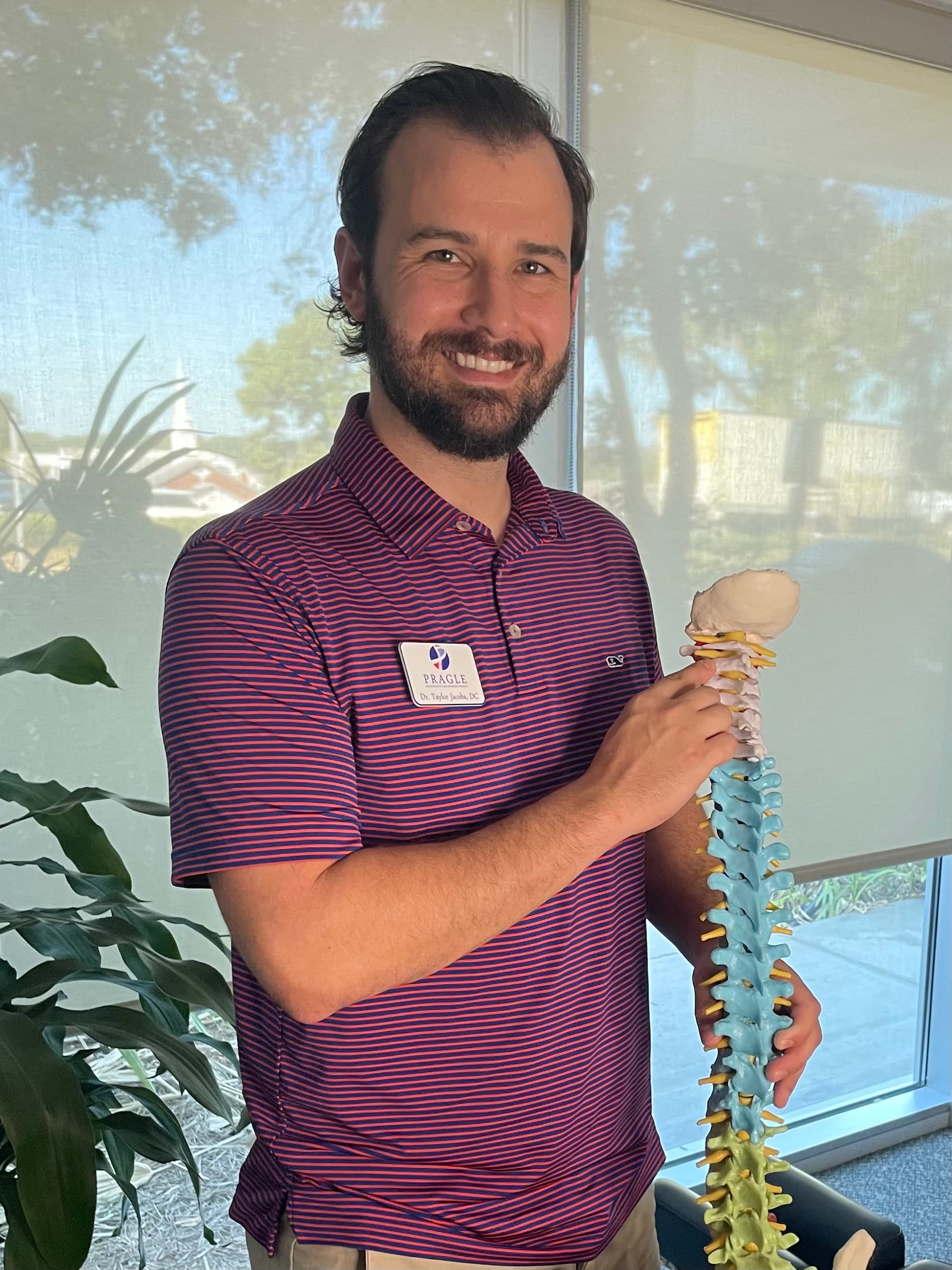
Dr. Pragle explaining spinal anatomy to a patient
“The 14-day deadline isn't just a legal technicality — it's the difference between $10,000 and $2,500 in medical coverage for your recovery.”
⚠ Don't Wait
See a Doctor Today — Protect Your $10,000 PIP Benefit
Same-day appointments. We bill PIP insurance directly — no cost to start.
Call (850) 508-5951Book online →Frequently Asked Questions
Answered by Dr. Eric Pragle, D.C.
What happens if I fail to see a doctor within 14 days after a Florida car accident?
Does seeing a chiropractor count for the 14-day rule?
What qualifies as an Emergency Medical Condition (EMC)?
Can I go to urgent care instead of a chiropractor to start my PIP clock?
I felt fine after my accident but now I am in pain three days later. Is it too late?
Does the 14-day rule apply even if the other driver was clearly at fault?
Pragle Chiropractic, Accident And Injury Clinic · Tallahassee, FL
Were You in a Car Accident?
Same-Day Appointments Available.
We bill Florida PIP insurance directly — no out-of-pocket cost to start your recovery. Serving all of Tallahassee including FSU and FAMU students.