
How to Document Your Car Accident Injuries for a Stronger Insurance Claim in Florida
At our office, we regularly see patients whose pain does not fully appear until hours, days, or sometimes weeks after a crash. Whether you were rear-ended on Apalachee Parkway, involved in a collision on Capital Circle, or injured in a crash on I-10, taking the right steps early can make a meaningful difference in your recovery and claim.
⚠ Florida law: you have 14 days after your accident to see a doctor — or lose up to $10,000 in PIP benefits.
Same-Day Appt → (850) 508-5951
Written by
Dr. Eric Pragle, D.C.
Car Accident Chiropractor · Pragle Chiropractic, Accident And Injury Clinic Tallahassee FL
Dr. Eric Pragle is a licensed Doctor of Chiropractic specializing in automobile accident injury evaluation and treatment. With deep expertise in Florida PIP insurance law, he helps Tallahassee accident victims navigate their coverage and receive the care they need — from initial evaluation through full recovery.
Key Takeaway
At our office, we regularly see patients whose pain does not fully appear until hours, days, or sometimes weeks after a crash. Whether you were rear-ended on Apalachee Parkway, involved in a collision on Capital Circle, or injured in a crash on I-10, taking the right steps early can make a meaningful difference in your recovery and claim.
How to Document Your Car Accident Injuries for a Stronger Insurance Claim in Florida
After a car accident, the days and weeks that follow can feel overwhelming. You may be dealing with pain, vehicle damage, missed work, insurance calls, and uncertainty about what to do next. One of the most important things you can do is document your injuries carefully and consistently.
Good documentation helps your medical providers understand your condition, supports appropriate treatment decisions, and creates a clearer record for your insurance claim. For Florida drivers, this is especially important because the state’s Personal Injury Protection (PIP) system has specific coverage rules and time limits.
At our office, we regularly see patients whose pain does not fully appear until hours, days, or sometimes weeks after a crash. Whether you were rear-ended on Apalachee Parkway, involved in a collision on Capital Circle, or injured in a crash on I-10, taking the right steps early can make a meaningful difference in your recovery and claim.
Seek Medical Care Promptly
Do not wait until pain becomes severe before seeking an evaluation. Following a collision, adrenaline can temporarily mask symptoms. Stiffness, headaches, neck pain, low-back pain, shoulder pain, numbness, dizziness, and reduced range of motion may develop gradually.
In Florida, prompt medical attention is also important for insurance purposes. PIP coverage generally requires you to receive initial medical services and care within 14 days of the motor vehicle accident. Waiting too long can jeopardize available benefits, even if your symptoms are real and related to the collision.
You may need emergency care after a serious crash, particularly if you have severe pain, loss of consciousness, confusion, weakness, difficulty breathing, chest pain, abdominal pain, or signs of a possible fracture. Absent these emergent symptoms, seeking care with a local auto injury clinic first can help you avoid ER and urgent care wait times and preserve your PIP benefits for when you need them most. For non-emergency musculoskeletal injuries, an auto accident evaluation can help identify conditions such as:
- Whiplash-associated disorders
- Cervical, thoracic, or lumbar sprain and strain injuries
- Disc-related symptoms
- Headaches following neck trauma
- Shoulder, hip, knee, or wrist injuries
- Numbness, tingling, or radiating pain
- Aggravation of a pre-existing spinal condition
Be honest and specific during every appointment. Tell the provider where you hurt, when the symptoms began, what movements aggravate your pain, and whether the symptoms interfere with sleep, work, driving, exercise, or household tasks.
Create a Detailed Injury Record
Your own written record can be valuable because symptoms often change over time. Medical records document what happens during appointments, but a personal injury journal captures what you experience between visits.
Start a daily or near-daily log as soon as possible. You do not need to write pages every day. A few clear notes can provide a useful timeline.
Include details such as:
- The date and time of your entry
- Pain location and severity, such as neck pain rated 7 out of 10
- New symptoms, including headaches, tingling, dizziness, or sleep difficulty
- Activities that worsened symptoms
- Activities you could not perform or had to modify
- Time missed from work or limitations while working
- Medication use and how it affected your symptoms
- Treatments received and your response to them
- Emotional effects, such as anxiety while driving after the accident
For example: “August 26: Woke up with stiffness at the base of my neck and a headache. Turning left while driving caused sharp pain. Could not complete my usual workout and needed help lifting my child. Pain increased after sitting at my desk for 45 minutes.”
This kind of entry is more useful than a vague note stating, “My back hurt today.” Specific, consistent information makes it easier to show how the accident affected your daily life.
Take Photos and Preserve Evidence
Photographs can help document visible injuries and the circumstances surrounding the collision. Take pictures as soon as it is safe to do so, and continue taking them as bruising, swelling, cuts, or other visible injuries evolve.
If possible, preserve copies of:
- Photos of all vehicles involved, including damage from multiple angles
- Photos of the accident scene, road conditions, traffic controls, debris, and skid marks
- Photos of visible injuries, such as bruises, swelling, abrasions, or lacerations
- Photos showing mobility aids, braces, ice packs, or other injury-related care
- A copy of the police crash report
- Witness names and contact information
- Insurance information for all involved drivers
- Tow-truck receipts, repair estimates, and rental-car records
Take injury photos in good lighting and include the date when possible. Avoid editing, filtering, or altering the images. Keep the original files stored securely in a cloud account, computer folder, or dedicated accident-claim folder.
Physical damage to a vehicle does not always match the severity of a person’s injury. Even a low-speed collision can force the neck and spine through sudden movements that cause soft-tissue injury. Still, photos of the collision and vehicle condition provide important context for the overall event.
Keep Every Medical and Financial Document
A stronger insurance claim is usually built on organized records. Create one folder—digital, paper, or both—for every document connected to your accident and treatment.
Keep copies of:
- Emergency-room, urgent-care, and hospital records
- Chiropractic examination and treatment records
- Imaging reports, including X-rays, MRI, or CT scans
- Referral records and specialist evaluations
- Physical therapy and rehabilitation records
- Prescriptions and pharmacy receipts
- Medical bills, explanation-of-benefits forms, and payment receipts
- Mileage or transportation costs for medical appointments
- Work restriction notes from your provider
- Wage-loss documentation from your employer
- Communications from insurers, adjusters, attorneys, and medical offices
Do not assume an insurance company already has every document it needs. Your provider may submit records and bills directly, but keeping your own complete file allows you to track what has been submitted and identify missing information.
It is also wise to save written communications with insurers. If an adjuster discusses something by phone, make a brief note afterward with the date, the person’s name, their company, and what was discussed.
Be Consistent With Treatment
One of the most common issues in injury claims is a gap in care. Insurance companies may argue that a long delay between appointments means the person was not seriously injured or that symptoms were caused by something other than the crash.
That does not mean you should attend treatment simply to support a claim. Care should always be medically appropriate and based on your condition. However, if your provider recommends a treatment plan, follow it as closely as possible. Attend appointments, complete recommended home exercises, and communicate when your symptoms change.
If you must miss an appointment because of work, illness, travel, transportation problems, or another legitimate reason, reschedule promptly. Let the office know why you missed the visit so your record accurately reflects the situation.
Consistency matters because recovery from auto injuries is often not linear. A patient may feel better for several days, then experience a flare-up after returning to work, sitting for extended periods, lifting, or driving. Regular reassessments help your provider document progress, setbacks, functional limitations, and any need to modify the treatment plan.
Tell Your Provider About All Symptoms
Do not focus only on the most painful area. Mention all symptoms, even if they seem minor or unrelated. After a collision, neck pain may be accompanied by headaches, shoulder pain, upper-back tightness, jaw discomfort, dizziness, low-back pain, or tingling into the arms.
Also let your provider know about prior injuries or pre-existing conditions. Having a prior back injury does not mean a new collision did not harm you. An accident can aggravate, worsen, or reactivate a previous condition. Accurate history helps distinguish what you experienced before the crash from what changed afterward.
Be careful not to exaggerate, minimize, or guess. The best documentation is truthful, specific, and consistent. If pain is intermittent, say so. If you had prior symptoms that became worse after the accident, explain exactly how they changed.
Avoid Mistakes That Can Hurt Your Claim
The goal is not to “build a case” through unnecessary care or inflated symptoms. The goal is to document the real impact of a real injury.
Avoid these common mistakes:
- Waiting too long to seek an initial evaluation
- Missing appointments without rescheduling
- Failing to disclose all symptoms or prior injuries
- Throwing away bills, receipts, reports, or correspondence
- Posting accident details, injuries, or activity photos on social media
- Giving recorded statements without understanding what is being requested
- Stopping treatment as soon as pain temporarily improves
- Ignoring provider recommendations without discussing your concerns
Social media deserves special attention. Insurance companies may review publicly available posts. A photo of you smiling at a family event or participating in an activity can be taken out of context. Consider limiting public posts about the accident, your injuries, treatment, travel, workouts, or physical activities until your claim is resolved.
How a Tallahassee Auto Injury Chiropractor Can Help
Chiropractic care can be an important part of the recovery process for many accident-related musculoskeletal injuries. At an auto injury clinic, the focus should be on a thorough evaluation, clear documentation, appropriate treatment, functional improvement, and communication with other healthcare professionals when needed.
Your records may include your accident history, symptom onset, physical examination findings, range-of-motion measurements, orthopedic and neurological testing, diagnosis, treatment plan, progress notes, referrals, and discharge status. This documentation can help demonstrate the connection between the collision, your injuries, and the care you received.
If you have been injured in a Tallahassee car accident, do not ignore pain simply because it seems manageable at first. Seek appropriate medical attention promptly, keep organized records, follow your treatment plan, and communicate openly with your providers. Careful documentation supports your health first—and it can also provide the foundation for a clearer, stronger insurance claim.

Chiropractic care at Pragle Chiropractic, Tallahassee FL
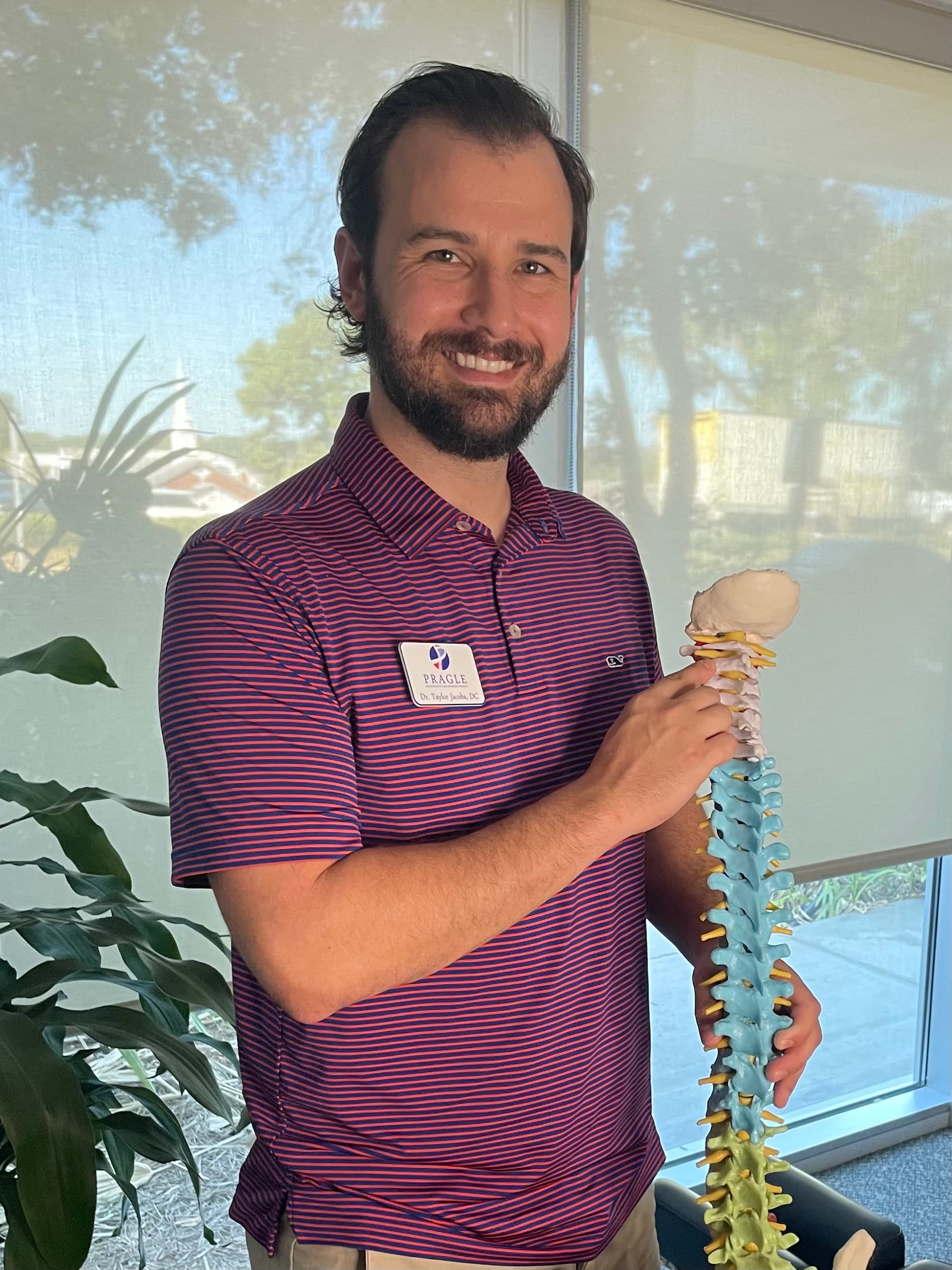
Dr. Pragle explaining spinal anatomy to a patient
“The 14-day deadline isn't just a legal technicality — it's the difference between $10,000 and $2,500 in medical coverage for your recovery.”
⚠ Don't Wait
See a Doctor Today — Protect Your $10,000 PIP Benefit
Same-day appointments. We bill PIP insurance directly — no cost to start.
Call (850) 508-5951Book online →Frequently Asked Questions
Answered by Dr. Eric Pragle, D.C.
What happens if I fail to see a doctor within 14 days after a Florida car accident?
Does seeing a chiropractor count for the 14-day rule?
What qualifies as an Emergency Medical Condition (EMC)?
Can I go to urgent care instead of a chiropractor to start my PIP clock?
I felt fine after my accident but now I am in pain three days later. Is it too late?
Does the 14-day rule apply even if the other driver was clearly at fault?
Pragle Chiropractic, Accident And Injury Clinic · Tallahassee, FL
Were You in a Car Accident?
Same-Day Appointments Available.
We bill Florida PIP insurance directly — no out-of-pocket cost to start your recovery. Serving all of Tallahassee including FSU and FAMU students.