
Delayed Symptoms After a Car Accident: Why You Feel Fine at First but Hurt Days Later
The surge of adrenaline after a crash can mask real injuries for hours or even days, which is why the first 72 hours after impact matter more than most patients realize. Getting evaluated early protects both your health and your Florida PIP coverage.
⚠ Florida law: you have 14 days after your accident to see a doctor — or lose up to $10,000 in PIP benefits.
Same-Day Appt → (850) 508-5951
Written by
Dr. Pragle, D.C.
Car Accident Chiropractor · Pragle Chiropractic, Accident And Injury Clinic Tallahassee FL
Dr. Pragle is a licensed Doctor of Chiropractic specializing in automobile accident injury evaluation and treatment. With deep expertise in Florida PIP insurance law, he helps Tallahassee accident victims navigate their coverage and receive the care they need — from initial evaluation through full recovery.
In this article
Key Takeaway
The surge of adrenaline after a crash can mask real injuries for hours or even days, which is why the first 72 hours after impact matter more than most patients realize. Getting evaluated early protects both your health and your Florida PIP coverage.
Almost every patient who walks into our Tallahassee clinic after a collision tells us the same story: they got out of the car, shook hands with the other driver, took photos of the damage, and genuinely believed they were unhurt. Some even decline treatment at the scene because nothing hurts. Then two or three days later they cannot turn their head to back out of the driveway. This is not a coincidence, and it is not a sign that something suddenly went wrong. It is the most common pattern we see in accident and injury care, and understanding why it happens can save you from both chronic pain and a denied insurance claim.
At Pragle Chiropractic, we evaluate patients every week who delayed care because they felt fine at impact. The purpose of this article is to explain the biology behind delayed symptoms, list the warning signs to watch for in the first 72 hours, and connect the timeline to Florida's 14-day PIP rule so you can protect your health and your coverage at the same time.
The Adrenaline Effect: Why Pain Stays Hidden at the Scene
When a car collision occurs, your body launches an immediate fight-or-flight stress response. Your adrenal glands release a flood of epinephrine and cortisol, your heart rate and blood pressure spike, and your brain narrows its attention to survival. One of the side effects of this chemical surge is pain suppression. The same hormones that prepare you to react also dampen the signals from injured muscles, ligaments, and joints so you can keep functioning through the crisis.
This adrenaline mask can last anywhere from a few minutes to several hours after impact, and in some cases the residual effect lingers for a day or more. During that window you may genuinely feel fine. You can move your neck, walk without a limp, and even tell the responding officer you are not injured. The problem is that the absence of pain is not the absence of injury. The tissues are already damaged; your nervous system simply has not started reporting it yet. Once the stress hormones clear, the pain arrives.
The Inflammation Wave: Why Pain Peaks on Day 2 or 3
What Is Actually Happening in Your Tissues
Within 24 to 72 hours of a collision, your body moves out of crisis mode and into repair mode. The adrenaline and cortisol that were suppressing pain begin to clear from your bloodstream. At the same time, your immune system ramps up an inflammatory response at every site of tissue damage. Small blood vessels dilate, fluid accumulates around injured muscles and ligaments, and chemical messengers like prostaglandins sensitize your pain receptors. This is the inflammation wave, and it is why most patients tell us their pain was worst on the second or third morning after the crash, not at the scene.
As inflammation builds, the surrounding muscles tighten into protective spasm to splint the injured area. That spasm is what makes your neck feel locked, your shoulders feel heavy, or your lower back seize up when you try to roll out of bed. This escalation from feeling fine to feeling awful over 48 to 72 hours is normal biology, not a sign that your injury is getting worse. But it does mean the damage was there all along, and the sooner it is evaluated the better your outcome will be.
Common Delayed Symptoms to Watch For
Not every delayed symptom is an emergency, but every one of them deserves a professional evaluation. The most common delayed complaints we see include neck pain and stiffness, often diagnosed as whiplash; mid-back or lower-back pain that worsens with sitting or bending; tension or cervicogenic headaches that start at the base of the skull; shoulder pain from seatbelt or steering wheel loading; numbness or tingling in the arms or hands from nerve irritation; dizziness or balance changes; brain fog and difficulty concentrating; sleep disturbances; and jaw pain or TMJ symptoms from the jaw being driven forward during impact.
Most of these symptoms respond well to conservative chiropractic care, gentle rehab, and inflammation control when they are caught early. However, certain red-flag symptoms require an emergency room visit, not a clinic appointment. If you experience weakness in your arms or legs, loss of bowel or bladder control, numbness in your saddle area, a severe headache that came on like a thunderclap, or any loss of consciousness, go to the nearest ER immediately. These can indicate spinal cord compression, internal bleeding, or a traumatic brain injury that needs acute care before any chiropractic treatment is considered.
Why the First 72-Hour Window Matters Most
There is a short period after any soft-tissue injury when the tissue is still responsive and healing can be guided rather than just managed. If you are evaluated within the first 48 to 72 hours, your clinician can identify injuries before protective scar tissue begins to form, calm the inflammatory response with appropriate manual therapy and modalities, and start a rehab protocol while your muscles and ligaments are still adaptable. Early care tends to be shorter in duration, less expensive, and far more likely to produce a full recovery.
When care is delayed by a week or more, the opposite happens. Inflammation has already matured into fibrotic adhesions, the muscles have learned dysfunctional movement patterns, and the nervous system has become sensitized to pain. Treatment at that stage is still effective, but it typically takes longer, costs more, and has a higher chance of leaving you with residual stiffness or recurrent flare-ups. The patients who recover fastest are almost always the ones who came in early, even when their pain was still mild.
The Florida 14-Day Rule Connection
Beyond the medical reasons, there is a hard legal deadline every Florida driver needs to know. Under Florida's Personal Injury Protection law, you must be evaluated by a licensed medical provider within 14 days of a motor vehicle accident, or your PIP coverage drops from the full $10,000 benefit to a maximum of $2,500. That may sound like plenty of time, but when you are waiting to see if your symptoms resolve on their own, two weeks pass quickly and the window closes.
To unlock the full $10,000 in PIP benefits, your evaluation must also include a determination of an Emergency Medical Condition, or EMC. Without that EMC finding, the $10,000 cap is not available even if you were seen within 14 days. This is exactly why waiting hurts you twice: you lose both the early treatment window that produces the best clinical outcome, and you risk forfeiting the coverage that pays for that treatment. Getting seen promptly protects your spine and your claim at the same time.
What to Do Right Now
If you were in a collision within the last few days, take these four steps regardless of how you feel right now. First, get evaluated by a qualified provider even if you currently have no pain. A clinical exam, orthopedic testing, and any necessary imaging can detect injuries before symptoms peak, and that evaluation starts the clock on your PIP coverage. Second, document your symptoms daily in a simple notebook or phone note, including when each symptom started, what makes it better or worse, and how it affects your sleep and daily activities. Third, do not settle with the at-fault driver's insurance company before you have been evaluated and started a treatment plan. Once you settle, your medical claim is closed. Fourth, follow the treatment plan your provider recommends. Inconsistent care is one of the most common reasons recovery stalls and claims get questioned.
Pragle Chiropractic, Accident and Injury Clinic offers same-week evaluations for Tallahassee accident patients and accepts Florida PIP directly, so there is no out-of-pocket barrier to getting seen within the 14-day window. Whether your pain is already significant or you simply want to make sure nothing is brewing, call us at (850) 508-5951 or book your evaluation online. The visit is quick, thorough, and often the single most important decision you make after a crash.

Spinal alignment evaluation — delayed pain after a crash often points to soft-tissue injury
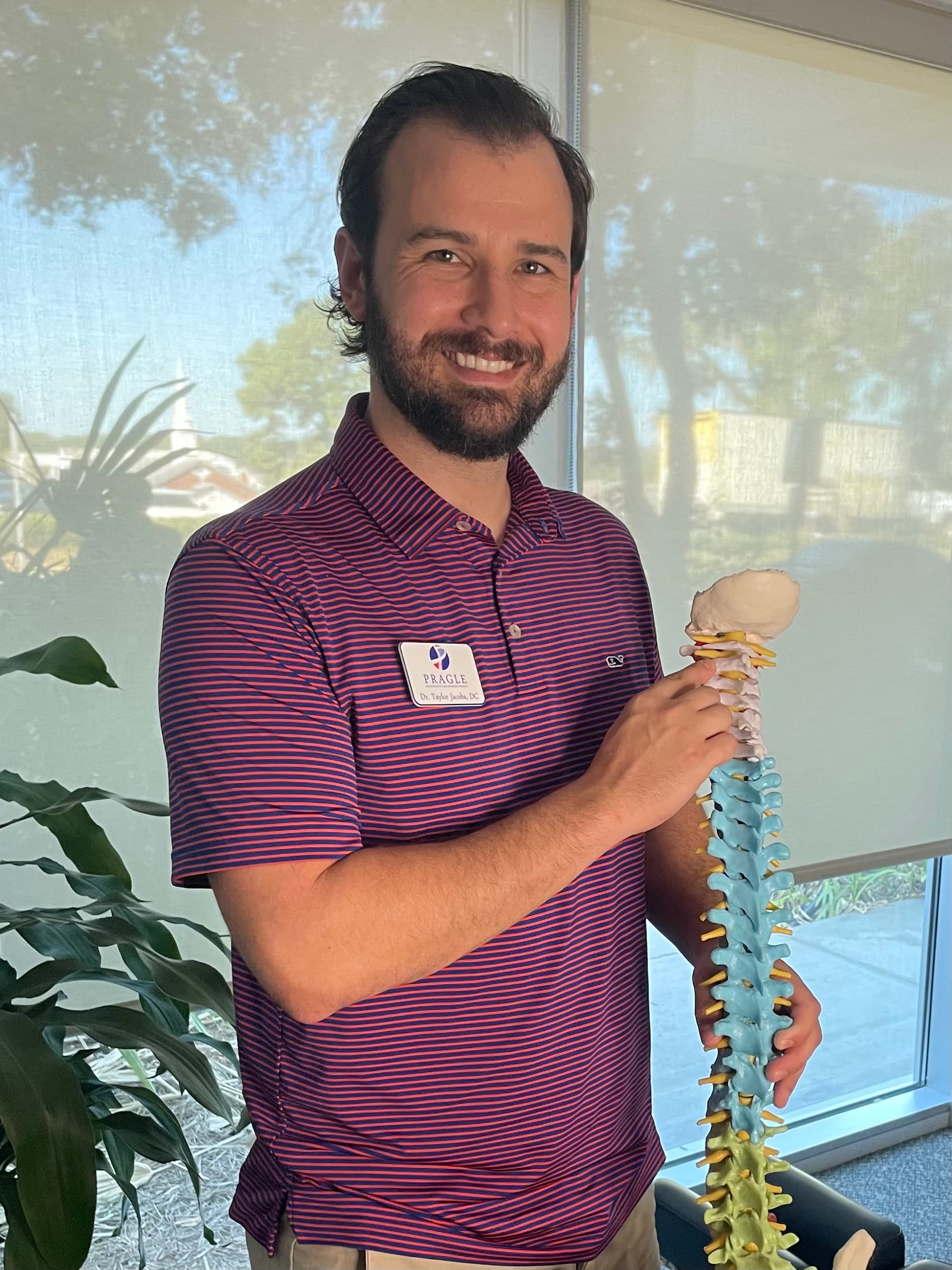
Dr. Pragle evaluating a post-accident patient at Pragle Chiropractic, Tallahassee FL
“The 14-day deadline isn't just a legal technicality — it's the difference between $10,000 and $2,500 in medical coverage for your recovery.”
⚠ Don't Wait
See a Doctor Today — Protect Your $10,000 PIP Benefit
Same-day appointments. We bill PIP insurance directly — no cost to start.
Call (850) 508-5951Book online →Frequently Asked Questions
Answered by Dr. Pragle, D.C.
Why is my pain worse on day two or three after the accident than it was at the scene?
Can I wait a week to see if the pain goes away on its own?
Which symptoms mean I should go to the emergency room instead of a chiropractor?
Do I need to talk to a lawyer before I see a doctor after a crash?
Will insurance still cover me if I told the officer at the scene that I was not hurt?
Pragle Chiropractic, Accident And Injury Clinic · Tallahassee, FL
Were You in a Car Accident?
Same-Day Appointments Available.
We bill Florida PIP insurance directly — no out-of-pocket cost to start your recovery. Serving all of Tallahassee including FSU and FAMU students.